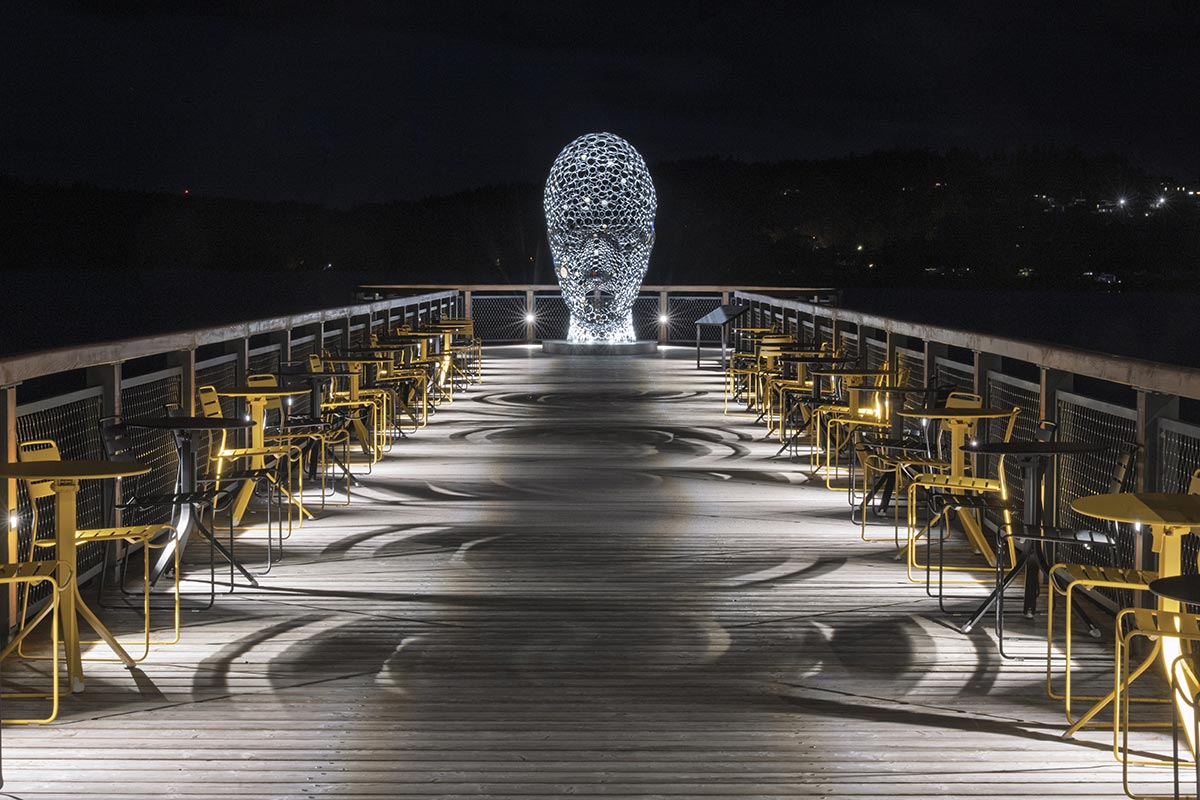
The Chapel of Gaia sculpture, made from recycled steel and glass, rises above the sea near an old village on the island of Alonnisos. The sculpture, a monumental head created from recycled materials of pipes or fused glass shards, evokes the feeling of a cathedral space of the mind. The Chapel of Gaia sculpture is a place for contemplation on how our existence is interconnected with the health of the seas. When visitors enter this temple of the mind, they can slow down and reflect on the fragility of the ecosystems with which we are connected. The ocean, with its enormous depths and incredible biodiversity, is not just a backdrop to human activity – it is a fundamental part of our survival, providing essential resources such as food, oxygen, and climate regulation.
The sculptural Chapel of Gaia, with its form and placement overlooking the sea, serves as a place for self-reflection, for contemplating how human actions – such as pollution, overfishing, and climate change – threaten the delicate balance of these aquatic ecosystems. Just as the chapel’s structure is made from recycled materials, our relationship with the ocean must also be one of recycling, regeneration, and respect. Moreover, ocean life is not just about the creatures that inhabit it, but also the crucial services it provides to the entire planet. The ocean’s role in regulating global weather patterns, absorbing carbon dioxide, and supporting the livelihoods of billions of people is irreplaceable.
Inside the Chapel of Gaia, visitors can connect through contemplation or meditation with nature. Each of us can thus seek answers to questions: How can we live in greater harmony with the natural world? How can we reduce our ecological footprint and transition to practices that regenerate, rather than deplete, the resources on which we depend? The chapel, which can be entered like a temple of the mind, also offers the impression of finding oneself beneath the surface, providing space for deep reflection on these questions and for supporting the protection of our oceans and all life within them. It is not just a work of art, but also a call to action – a reminder that ocean health is directly connected to human health and that we must act to protect both.